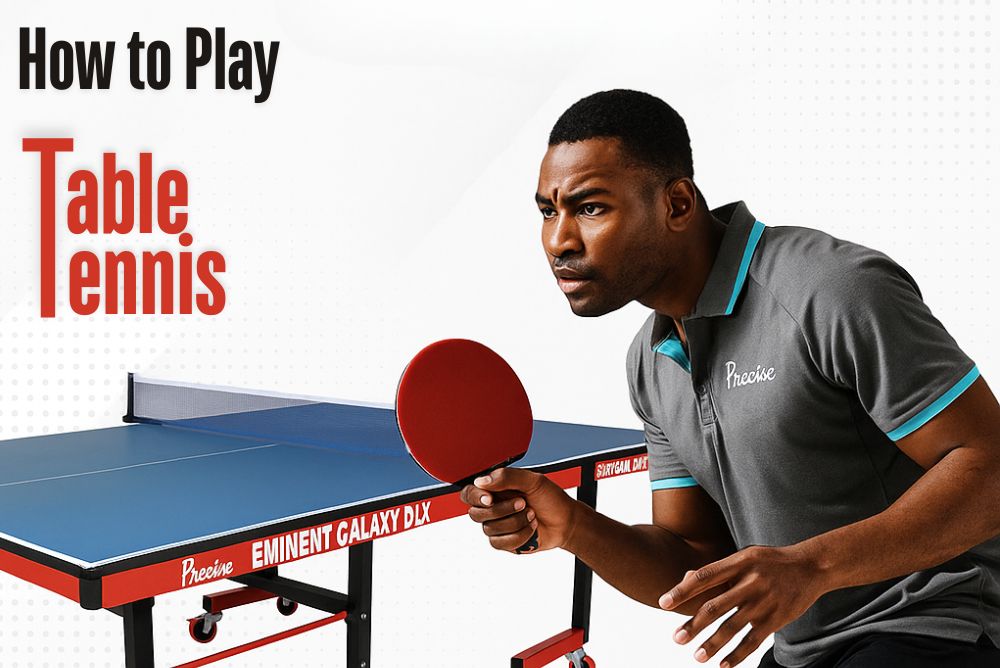
Table tennis is a fast-paced and fun sport that anyone can enjoy. Whether you’re playing at home or competing in a local tournament, learning how to play table tennis properly makes the game more enjoyable and rewarding. It improves focus, coordination, and body control.
At Precise Sports, we offer a full Table Tennis Tables Series and a wide range of Table Tennis Accessories to help players at every level. From practice tables to tournament-ready models, our goal is to support your game with reliable gear and smart features.
Essential Equipment You Need to Play Table Tennis
Having the right equipment is the first step toward enjoying and improving your game. Whether you are a beginner or aiming to play professionally, using the correct gear ensures a smoother learning experience and better performance. Precise Sports offers a complete range of Table Tennis Tables Series and Table Tennis Accessories to help you start right.
Quality Table
A good table tennis table is the centerpiece of your game. Look for tables based on your needs and space. For home use, foldable tables with wheels and playback modes are ideal, allowing solo practice and easy storage. Advanced or tournament-level tables offer better bounce, surface consistency, and sturdy frames that can handle intense rallies.
Paddles and Rackets
A quality paddle with a good rubber surface helps control spin and speed. Beginners should go for all-round paddles, while advanced players can choose based on grip and playing style.
Table Tennis Balls
Use 40mm lightweight plastic balls approved for standard gameplay. Always keep extra balls on hand for practice or drills.
Posts with Net
A solid net and post set is essential for regulation play. Make sure the net is easy to fix, holds its tension, and is set at the official height (15.25 cm). Loose or misaligned nets can ruin gameplay and practice.
Comfortable Footwear
Wear sports shoes with good grip to avoid slipping and allow quick side-to-side movements during the game.
Top Covers and Protection
Use a Table Tennis Tables Top Cover to protect your table from dust and moisture when not in use. This keeps the surface clean and ready for smooth gameplay.
Arena/Boundaries for Tournaments
Using side and end barriers helps define your play zone. This is especially useful during club training or matches, as it contains stray balls and mimics official playing conditions.
Tournament Scoreboard
Keep track of your game with a table tennis tournament scoreboard. It helps during practice and adds seriousness to competitive games.
Table Cleaner or Wipes
To keep your table in top condition, use a table tennis-safe cleaner or microfiber wipes. Regular cleaning improves bounce consistency and increases table life.
Cover Storage Trolley or Rack
If you're managing a facility or multiple tables, having a trolley for top covers or a table rack helps store covers, nets, and other accessories neatly in one place.
How to Play Table Tennis - Official Rules
To fully enjoy and respect the game, you need to understand the basic rules. Whether you're a casual player or planning to compete, these rules form the foundation of fair play and smooth matches.
Scoring System
Each game is played up to 11 points. The first player to reach 11 wins, but you must be ahead by at least 2 points. For example, if the score is 10-10, play continues until one player is two points ahead. A full match usually includes best of 5 or 7 games depending on the format.
Service Rules
The ball must be tossed at least 6 inches into the air from an open palm and struck behind the end line. It should bounce once on your side and then on the opponent’s side. Faulty serves lead to point loss.
Let Serve Rule
If the serve touches the net but still lands correctly on the opponent’s side, it’s called a "let". The point is not counted, and the serve is replayed. This rule helps avoid unfair point losses due to small interruptions.
Ball in Play
After the serve, the ball must bounce once on the receiving side and be returned. The rally continues until a fault is made. The ball can pass around the net post as long as it lands legally.
Legal Returns & Fouls
You can return the ball using any part of the racket, but touching the table with your free hand is a foul. If you miss the ball or hit it off the table, the opponent earns the point. To avoid fouls and misplays, practicing on tables with proper table tennis accessories like arena boundaries and scoreboards is helpful.
Authentic Match Environment
This setup is suitable for both casual games and official matches. Whether you're at a club, training center, or in a competition, it ensures an authentic match environment.
Basic Techniques and Shots
To get better at table tennis, you need to learn and practice the basic shots and skills. Whether you're playing just for fun or want to join competitions, having good form and technique will help you play faster, have more control, and feel more confident. Regular practice is key to improving.
Grip
There are two popular grips: Shakehand grip and Penhold grip. The shakehand grip is more common and gives balanced control over both forehand and backhand shots. The penhold grip offers better wrist movement, often used in fast-paced close-table play.
Stance and Footwork
Stand with your knees bent, feet shoulder-width apart, and body slightly forward. This ready stance helps you move quickly in any direction. Proper footwork minimizes effort and keeps you balanced during fast rallies.
Forehand Drive
This is a controlled, attacking shot used to apply pressure. Swing forward smoothly while keeping your wrist firm. Great for rallies and returning topspin balls. Practicing this shot on tables with Tennis Tables Add-on Features like playback mode helps improve accuracy.
Backhand Push
A basic defensive shot used to return low balls. Push the ball forward with a slight slice, keeping it low to the net. It’s useful to regain control of the rally and set up a forehand shot next.
Topspin & Smash
Topspin adds curve and control to your attack, while the smash is a fast, powerful shot used to finish points. Start slowly and practice each motion step by step. If you're serious about improving, consider training with a table tennis tournament scoreboard to track points during drills.
Serve Variations
Try using different kinds of serves like short spin, fast long serve, or side spin. A good serve can help you score points or prepare for a strong rally. Make sure the net is set up correctly so your serve height is accurate during practice.
Daily Practice Benefits
Practicing these basic skills every day helps you improve your timing and rhythm, especially when using the right equipment and accessories.
Playing Tips for Beginners
If you're new to the game, it might seem a little challenging at first, but with the right mindset and setup, you'll get better quickly. These beginner tips focus on steady practice, staying consistent, and using the right equipment. Practicing on a good surface and with proper gear can make learning easier and more enjoyable.
Start With Control, Not Power
Focus on placing the ball where you want rather than hitting hard. Controlling the ball helps build confidence and consistency.
Practice Basic Shots Daily
Repeat forehand drives, backhand pushes, and basic serves regularly. Tables with Tennis Tables Add-on Features like playback mode (fold-back half table) allow solo practice even without a partner.
Watch the Ball Closely
Train your eyes to follow the ball from the opponent’s paddle to your side. This sharpens your reaction time and reduces missed shots.
Improve Footwork
Don’t stay in one spot while playing. Keep your knees bent, move side to side, and adjust your position before each shot. Practicing in a marked playing area helps improve footwork, focus, and control.
Keep Track of Progress
Use a scoreboard or training journal to note how often you win rallies or make errors. This helps you set goals and measure your growth.
Protect Your Equipment
Clean your table and paddles regularly. Store them in a dry place and use covers to extend their life and maintain performance.
Stay Consistent
With patience and regular practice, you’ll see clear progress no matter your age or experience level. Starting smart makes a big difference.
Health and Skill Benefits of Playing Table Tennis
Table tennis is a fun and engaging sport that offers more than just entertainment; it comes with a range of health and mental benefits. Regular play helps boost concentration, sharpens your reflexes, and keeps your body moving without putting too much strain on your joints or muscles. It’s an ideal activity for people of all ages, promoting quick thinking and coordination. Whether you’re playing a friendly match at home or practicing seriously with a proper setup, the positive effects on your mind and body can last well beyond the game.
Boosts Mental Sharpness
Table tennis helps sharpen your mind by training you to think fast and react quickly. It boosts decision-making skills, enhances memory, and strengthens hand-eye coordination. These benefits become even more noticeable when you track your progress and matches using a proper scoreboard setup.
Full-Body Exercise
It may seem like a light sport, but it activates your legs, arms, and core. Regular play improves flexibility, muscle tone, and overall endurance perfect even for those with limited space or time.
Improves Reflexes and Focus
Constant movement and quick ball returns train your eyes and hands to react faster. Practicing on a responsive table with good bounce (like in the Table Tennis Tables Series) sharpens your reflex timing naturally.
Supports Heart Health
Even 30 minutes of play improves blood circulation and burns calories. It’s a great low-impact cardio option for all age groups.
Social and Emotional Benefits
Whether you're playing at home or in a club with clearly marked boundaries, table tennis is a great way to bring people together. It encourages teamwork, teaches patience, and helps build emotional balance all while enjoying the game.
Encourages Discipline and Care
Using protective covers and proper gear helps young players learn to take care of their equipment, building habits of discipline, responsibility, and respect for their playing tools.
With patience and regular practice, you’ll see clear progress no matter your age or experience level. Starting smart makes a big difference.
FAQs
-
What is the ideal size of a standard table tennis table?
A standard table tennis table measures 9 feet long, 5 feet wide, and 2.5 feet high. All models in the Precise table tennis tables series follow this official size, suitable for casual and tournament play.
-
Can I use a table tennis table outdoors?
Yes, but make sure to choose a model with weather-resistant features and always protect it with a table tennis table top cover when not in use. Precise also offers accessories to improve table life outdoors.
-
What’s the difference between indoor and outdoor table tennis tables?
Indoor tables offer better bounce but aren’t weather-resistant. Outdoor tables are built to handle sun and rain.
-
How much space do I need to set up a table?
You need at least 17x11 feet for comfortable play around a standard table.
-
How often should I replace my paddle or net?
Replace paddles when the rubber wears out and nets if they sag or tear usually after 6–12 months with regular use.
Conclusion
Table tennis is easy to start, fun to learn, and great for both physical and mental fitness. Whether you're playing casually at home or aiming for a competitive edge, knowing the official rules, mastering the basic techniques, and investing in the right table tennis tables series and table tennis accessories makes a huge difference.
Precise offers everything from table tennis tables, add-on features, posts with net, arena/boundaries, top covers, to tournament scoreboards giving players of all levels the tools they need to enjoy the game with full passion and comfort. So grab your paddle, set up your space, and start playing!
