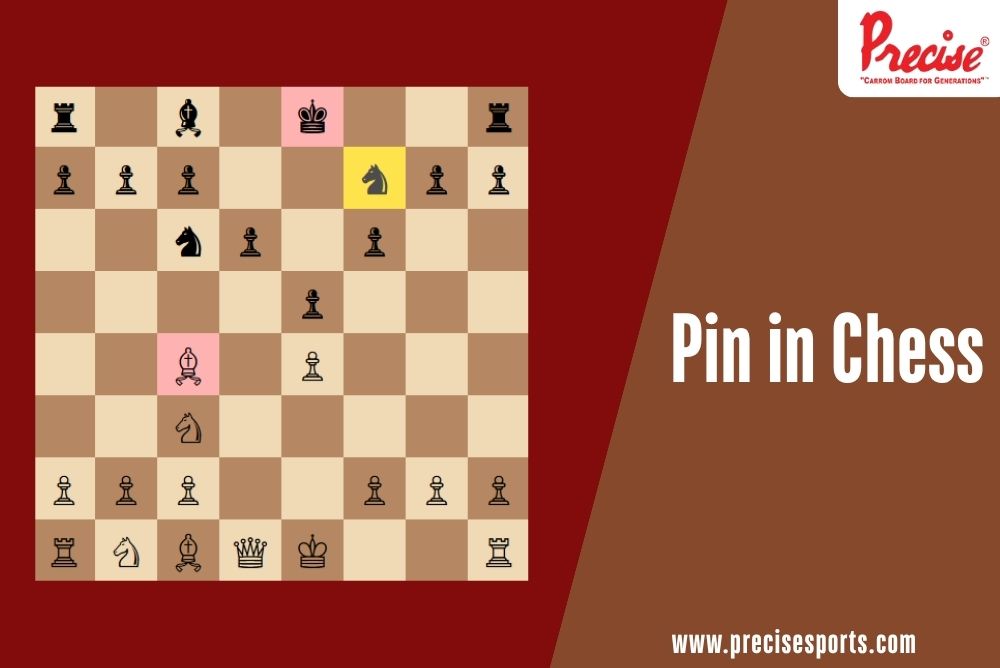
In chess, tactics often decide the outcome of a game, and one of the most effective tactical ideas is the pin . Whether you are a beginner learning basic patterns or a regular player trying to improve your calculation, understanding the chess pin can help you control key positions and win important material. A pin restricts your opponent’s movement, limits their choices, and gives you a strong strategic advantage if used correctly. In this guide, you will learn what a pin is, why it matters, and how it can be used to gain the upper hand in your games.
What is a Pin in Chess?
A pin in chess is a tactical situation where one piece cannot move because doing so would expose a more valuable piece behind it. In simple terms, the front piece is “pinned” and becomes restricted. The opponent takes advantage of this restriction to gain better control, win material, or improve their position.
Pins usually involve long-range pieces such as the bishop, rook, or queen . These pieces line up along a rank, file, or diagonal to trap a piece in front of a higher-value target. Understanding what a pin is in chess is important because it helps you spot moments where you can limit your opponent’s options and create long-term pressure
Why Use a Pin in Chess?
Players use a pin in chess because it limits the movement of an opponent’s piece and creates strong tactical pressure. A pinned piece becomes weak since it cannot freely move without causing a bigger loss, especially when it is shielding a more valuable piece like the king or queen. This gives you opportunities to improve your position, win material, or force your opponent into mistakes.
Using chess pinning also helps you control important squares and lines on the board. It can stop your opponent’s plans, delay their development, and give you the initiative in the game. Even a simple pin can change the balance of a position and open the way for powerful attacking ideas, particularly in well-known openings like the King’s Indian Defense , where piece coordination is critical.
How to Use a Pin for Maximum Advantage in Chess?
To gain the most from a chess pin, you need to understand how to convert the positional pressure into a real advantage. Here are some simple ways to use a pin effectively:
1. Increase Pressure on the Pinned Piece
Once you create a pin, add more attackers. The pinned piece cannot defend itself well, so bringing another piece like a knight, rook, or queen often forces your opponent into a difficult position.
2. Target the Piece Behind the Pin
Sometimes the goal is not the pinned piece but the more valuable piece behind it. Keeping pressure on both pieces can force exchanges that benefit you.
3. Fix the Structure Around the Pin
If your opponent pushes pawns to break the pin, punish the weaknesses created. A pin often leads to structural problems that you can use later in the game.
4. Use the Pin to Gain Material
If the pinned piece cannot move, you might win it with repeated attacks. Many tactical combinations start with a simple pin and end with capturing key material.
5. Combine the Pin With Other Tactics
A pin can work well with forks, skewers, discovered attacks, and mating threats. Using two tactics together increases your chances of gaining a strong advantage.
Types of Pins in Chess
Pins appear in many patterns, and each type has its own strategic purpose. Understanding these different types of pins in chess helps you identify threats, create pressure, and convert small advantages into winning positions. Below are the main and advanced pin types explained in detail:
1. Absolute Pin
An absolute pin is the strongest form of pin. Here, a piece is pinned directly to the king, which means the pinned piece cannot legally move at all. Since moving it would expose the king to check, the pinned piece becomes almost useless.
Why it is powerful:
- It freezes the pinned piece completely.
- It can be attacked again and again until it is captured.
- It often helps you gain full control of a file, rank, or diagonal.
Example:
A bishop pinning a knight that stands in front of its king.
2. Relative Pin
A relative pin happens when a piece is pinned to a valuable piece such as the queen or rook, but the move is still legal. The pinned piece could move, but doing so would lead to a big material loss, which forces the opponent to keep it in place.
Why it matters:
- It limits your opponent’s active options.
- It allows you to build pressure slowly.
- The pinned piece often becomes an easy target.
Example (Relative Pin):
A bishop on b5 pins a knight on c6, and behind the knight is the black queen on d7. The knight can move, but if it does, the queen will be captured. So the knight remains stuck in place.
3. Situational Pin
A situational pin depends on the position and strategy rather than strict rules. Moving the pinned piece may not lose material immediately, but it could weaken the position or create tactical problems.
Why it matters:
- It creates long-term positional pressure.
- It forces your opponent into passive defense.
- It prepares future tactics like forks or discovered attacks.
Example:
A knight cannot move because it would allow a strong attack on the king or open up a key square.
4. Cross Pin
A cross pin occurs when one piece is pinned from two directions at the same time, usually by two long-range pieces such as a bishop, rook, or queen.
Why it is dangerous:- The pinned piece becomes extremely restricted.
- The defending player cannot break both pins easily.
- Additional attackers often win the pinned piece quickly.
Example:
A bishop pins a knight on the diagonal, and at the same time, a rook pins it along the file.
5. Double Pin
A double pin takes place when one attacking piece pins two enemy pieces at once. This usually happens on long diagonals or open files.
Why it works well:
- The defender cannot save both pinned pieces.
- One of the pinned pieces often becomes overloaded.
- It creates guaranteed material gain with proper follow-up.
Example:
A bishop on a long diagonal pinning a knight and rook that stand on the same diagonal.
6. Killer Pin
A killer pin is a very strong tactical pattern where the pinned piece is not just restricted, it is guaranteed to be lost sooner or later.
It often appears when:
- the pinned piece is attacked repeatedly,
- the defender cannot add support,
- the piece behind the pin is extremely valuable (king or queen).
Why it is called “killer”:
- The pinned piece cannot escape.
- Pressure keeps increasing until it is captured.
- It may also lead to a direct attack on the king.
Example:
A rook pins a knight to the queen, and the attacker brings more pieces until the knight eventually falls.
What is the Difference Between a Pin and a Skewer?
A pin and a skewer are similar tactical ideas, but they work in opposite ways. In a pin, a less valuable piece is in front, and a more valuable piece is behind it. The front piece becomes restricted because moving it exposes the more valuable piece.
In a skewer, the order is reversed. A more valuable piece stands in front, and a less valuable piece is behind it. When the valuable piece is attacked, it is forced to move, and the piece behind it becomes exposed. Skewers often lead to winning material because the back piece cannot escape once the front piece shifts out of the way.
In simple terms:
- Pin: Low-value piece in front, high-value piece behind.
- Skewer: High-value piece in front, low-value piece behind.
Buy Chess Online From Precise Sports
If you want a well-built chess board set for daily practice or competitive training, Precise Sports offers high-quality options suitable for all skill levels. Whether you are learning tactical ideas like the pin or preparing advanced openings such as the French Defense or the King’s Indian Defense, a sturdy chess board helps you train comfortably and focus better during every game.
Precise Sports also provides finely crafted chessmen made with excellent balance and durability. These pieces allow smooth movement, clear visibility, and reliable handling during long practice sessions. If you want a professional playing experience at home, you can confidently buy chess online from Precise Sports.
FAQs
-
How to escape a pin in chess?
You can escape a pin by moving the pinned piece if it’s legal, blocking the attacking line, exchanging the attacker, or repositioning your king to remove the threat.
-
What is pin full form?
In chess, “pin” has no full form; it is simply a tactical term that describes restricting a piece.
-
What does 2 pins mean?
“2 pins” usually refers to either two pieces being pinned at the same time or a double pin, where one attacking piece pins two enemy pieces.
-
How do I choose the right pin type?
Choose the pin type based on the position: Use absolute or relative pins to restrict movement. Use situational, cross, or double pins when they create pressure or tactical gain.
-
What is the hardest position in chess?
The hardest positions are usually complex middlegames with many attacking and defensive possibilities, where one small mistake can change the entire outcome.
Conclusion
The pin is one of the most important tactical ideas in chess , and understanding how it works can greatly improve your overall game. From absolute and relative pins to advanced patterns like cross pins and killer pins, each type helps you restrict your opponent’s pieces and create strong attacking chances. Knowing when to apply a pin, how to maintain pressure, and how to escape one gives you better control in both the opening and middlegame.
By recognising these patterns early, you can find more opportunities to win material, weaken your opponent’s position, and guide the game toward a favourable result. If you want a reliable chess board and chessmen to practice these tactics effectively, Precise Sports offers quality products that support long-term learning and consistent improvement.
