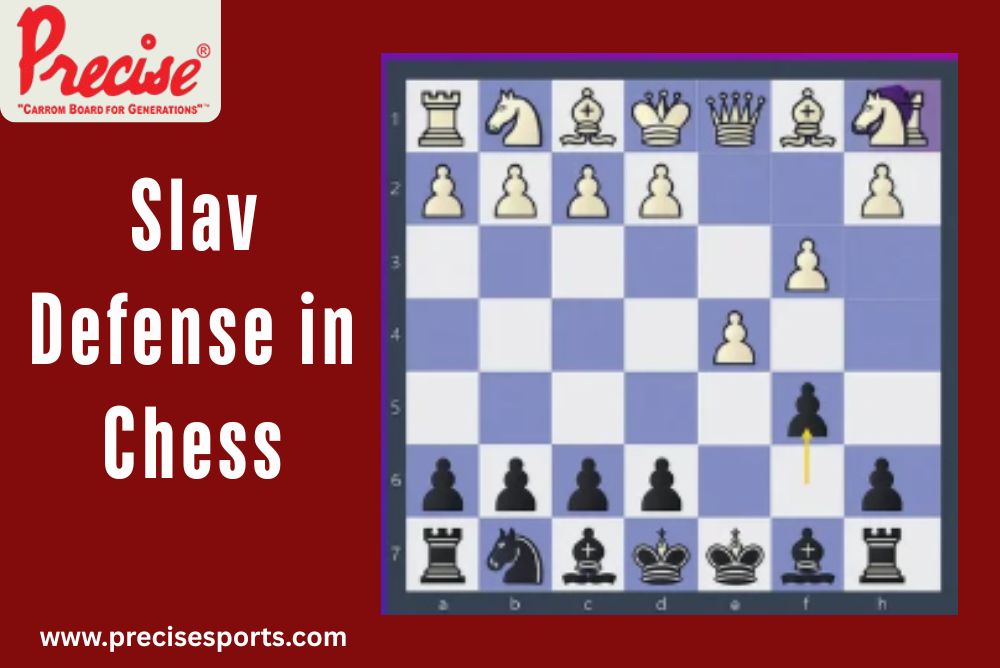
The Slav Defense is one of the most solid and respected chess openings for Black against 1.d4. It begins with the moves 1.d4 d5 2.c4 c6 , aiming to strengthen the center and maintain a flexible pawn structure. Known for its balance between defense and counterattack, the
Players who prefer a strong positional setup rather than risky tactics often rely on this Defense. It allows Black to develop pieces smoothly while keeping the pawn structure intact. Over the years, many world champions have used the Slav Defense to neutralize aggressive White openings and gradually seize control of the game.
What is the Slav Defense?
The Slav Defense is a classical chess opening that begins after the moves 1.d4 d5 2.c4 c6. It is one of the main defenses against the Queen’s Gambit — a popular chess opening for white where Black refuses to weaken their center by protecting the d5 pawn with another pawn instead of giving it up.
In simple terms, the Slav Defense helps Black maintain a strong and flexible pawn structure. Unlike other openings that can lead to early weaknesses, this one keeps Black’s position solid and ready for counterplay. The Slav Defense chess opening is often used by players who prefer strategic battles, slow buildup, and solid defense over direct attacks.
Why Choose the Slav Defense?
Many players choose the Slav Defense because it offers both safety and flexibility. Unlike risky openings, this defense allows Black to develop all pieces naturally without creating weaknesses in the pawn structure. The move …c6 strengthens the d5 pawn, preventing early pressure from White and setting up a solid base for counterattack.
Different Variations of the Slav Defense
The Slav Defense offers a wide range of variations that allow both Black and White to choose positions based on their playing style. Some lines lead to quiet positional battles, while others open up sharp tactical possibilities. Below are the most well-known and effective variations of the Slav Defense chess opening :
Main Line Slav Defense (1.d4 d5 2.c4 c6 3.Nf3 Nf6 4.Nc3 dxc4)
This is the traditional and most frequently played line. Black captures on c4, aiming to hold the pawn temporarily while completing development. It often leads to dynamic positions with equal chances for both sides.
Exchange Slav (1.d4 d5 2.c4 c6 3.cxd5 cxd5)
A solid and symmetrical variation. It removes tension early, resulting in balanced pawn structures. Many positional players prefer this line because it emphasizes strategic play over tactical complications.
Semi-Slav Defense (1.d4 d5 2.c4 c6 3.Nf3 Nf6 4.Nc3 e6)
This variation adds flexibility but also increases complexity. The Semi-Slav can lead to sharp play, especially in lines like the Meran and Anti-Meran systems. It’s a favorite among advanced players who enjoy rich middlegame ideas.
Chebanenko (…a6) Slav (1.d4 d5 2.c4 c6 3.Nf3 Nf6 4.Nc3 a6)
Known for its modern approach, the Chebanenko Slav prepares …b5 to challenge White’s queenside while keeping options open in the center. It’s a popular choice for players who like strategic flexibility.
Classical Slav (1.d4 d5 2.c4 c6 3.Nf3 Nf6 4.Nc3 dxc4 5.a4 Bf5)
One of the purest forms of the defense, the Classical Slav focuses on solid piece placement. Black develops the light-squared bishop before closing the pawn structure, ensuring smooth development and long-term stability.
Alekhine Variation (1.d4 d5 2.c4 c6 3.Nf3 Nf6 4.Nc3 dxc4 5.e3 b5 6.a4 b4)
This line, named after World Champion Alexander Alekhine, is more aggressive. Black defends the c4 pawn with …b5 and …b4, grabbing space on the queenside. It often leads to sharp, tactical positions with chances for both sides.
Geller Gambit (1.d4 d5 2.c4 c6 3.Nf3 Nf6 4.Nc3 dxc4 5.e4)
A bold choice for White, the Geller Gambit sacrifices a pawn to gain rapid development and open lines for attack. It’s less common but dangerous, especially if Black is unprepared for the early central tension.
Quiet Variation (1.d4 d5 2.c4 c6 3.Nf3 Nf6 4.e3)
The Quiet Variation avoids sharp play and focuses on solid development. White maintains central control and aims for slow buildup rather than immediate confrontation. This line is often used by players who value structure and long-term planning.
Strength of the Slav Defense
The Slav Defense is known for its solid structure, reliability, and long-term strategic strength. Unlike many other openings where one small mistake can lead to an early disadvantage, the Slav gives Black a safe and consistent position right from the start.
One of the main strengths of this defense is the strong pawn structure . The pawns on d5 and c6 protect each other, making it difficult for White to break through in the center. This structure also allows Black to develop pieces harmoniously without creating weaknesses.
Another key advantage of the Slav Defense is its flexibility . Black can choose between quiet, positional play or active counterattacks depending on the variation. For instance, in the Chebanenko line, Black can expand on the queenside, while in the Semi-Slav, tactical opportunities often arise in the center.
The opening is also theoretically sound , meaning it has been tested at the highest levels of chess for decades. Many world champions, including Vladimir Kramnik and Viswanathan Anand, have successfully used the Slav in their tournaments due to its dependability and low-risk nature.
Common Traps and How to Avoid Them
No opening is completely safe, and the Slav Defense also has its share of pitfalls. Here’s a well-known trap to keep in mind:
After 1.d4 d5 2.c4 c6 3.Nf3 Nf6 4.cxd5 cxd5 5.Nc3 Nc6 6.Bf4, White sets up one of the best chess traps in the Slav Defense, creating a hidden tactical threat. If Black carelessly plays …e6, then 7.e4! comes with strong effect. After dxe4 8.Nxe4 , the knight on f6 is pinned, and Black’s position can quickly collapse.
Solution: Stay cautious and develop wisely. Moves like …a6 or …Bf5 maintain flexibility and prevent White’s early e4 break. Understanding these simple traps helps you stay solid and confident in the Slav Defense chess opening.
How to Study Slav Defense?
Want to get confident with the Slav Defense? Here’s a simple plan to help you learn it step by step:
1. Start with the Core Lines
Begin with the Classical Slav and Semi-Slav Defense. Use a physical or digital board to go through each move slowly this helps you remember typical setups and plans.
2. Practice Regularly
Play short practice games using the Slav Defense online or with friends. The more you apply it in real games, the quicker you’ll understand key positions and pawn structures.
3. Study Grandmaster Examples
Watch how top players like Kramnik, Anand, and Carlsen handle Slav. Notice how they stay solid early and look for counterplay later. Their games are the best practical lessons you can get.
4. Use the Right Tools
Chess databases, study books, and training apps make learning easier. Reviewing positions visually helps you grasp long-term strategies instead of just memorizing moves.
5. Focus on One Variation
Pick one setup for example, the Chebanenko Slav (…a6) and play multiple games with it. Note what works and where you face trouble, then review those moments after each game.
How the Slav Defense Can Improve Your Chess?
The Slav Defense is more than just an opening; it’s a training ground for better chess understanding. Playing it regularly helps develop patience, planning, and positional awareness. Since the opening focuses on maintaining a strong pawn structure and solid piece development, you naturally learn how to handle strategic positions and time your counterattacks effectively. It trains you to think long-term rather than relying only on quick tactics.
Another major benefit of the Slav Defense is that it strengthens your endgame and defensive skills. Many games in this opening lead to simplified positions where accuracy and structure matter most. It also boosts confidence against 1.d4, giving you a dependable and flexible setup that works from club level to advanced play. In short, mastering the Slav Defense not only improves your opening repertoire but also sharpens your overall chess thinking.
FAQs
-
Is the Slav Defense good?
Yes, the Slav Defense is a solid and dependable opening suitable for players at all levels.
-
Who are famous players of the Slav Defense?
Famous players of the Slav Defense include Vladimir Kramnik , Viswanathan Anand, Magnus Carlsen, Veselin Topalov, and Garry Kasparov, all of whom have used it successfully in top-level tournaments.
-
Why is it called Slav Defense?
It’s called the Slav Defense because it was first analyzed and played by Slavic chess masters from Eastern Europe, particularly from countries like Russia and the Czech Republic, in the late 19th century.
-
What is the deadliest chess opening?
The Sicilian Defense is often considered the deadliest chess opening because it creates sharp, tactical positions and offers Black strong counterattacking chances right from the start.
Conclusion
The Slav Defense remains one of the most trusted and strategically rich openings in chess. Its solid pawn structure, balanced gameplay, and flexibility make it a favorite among both beginners and grandmasters. Whether you prefer slow, positional battles or well-timed counterattacks, the Slav offers a reliable setup that fits many styles. The Slav Defense is one of the most solid and respected chess openings for Black against 1.d4. Whether you’re learning on a digital board or a classic chess board set , this defense builds a strong foundation for your game.
For players looking to build a strong foundation in chess, learning the Slav Defense is an excellent choice. With regular practice, studying master games, and understanding key variations, you can confidently use this opening to strengthen your overall game.
